
Domain flipping — buying domain names at a low price and selling them for a profit — has created a multi-billion dollar aftermarket. According to DNJournal, which tracks publicly reported domain sales, premium .com domains routinely sell for five to seven figures. In 2024, voice.com reportedly sold for $30 million, and sex.com once changed hands for $13 million.
But you don't need millions to start. Many domain investors build profitable portfolios by registering domains at $8–12 each and selling them for $500–$5,000. This guide covers the strategies, tools, and mistakes to know before you start.
How Domain Flipping Works
The concept is simple: register or buy a domain name, then sell it to someone who values it more. The domain aftermarket — run by platforms like Sedo, Afternic (owned by GoDaddy), Dan.com, and Flippa — facilitates billions of dollars in domain transactions annually.
- Hand registration — Register unregistered domains at retail price (~$10). The profit margin is highest but finding good names is competitive.
- Expired domain auctions — Bid on recently expired domains through services like NameJet, SnapNames, or GoDaddy Auctions. These often come with existing backlinks and search authority.
- Aftermarket purchases — Buy undervalued domains from other investors or marketplaces and resell at a higher price.
- Drop catching — Use automated services to grab high-value domains the instant they expire and become available for registration.
What Makes a Domain Valuable?
Not all domains are created equal. Professional domain investors — sometimes called domainers — evaluate domains based on several key factors. NameBio, which maintains a database of over 1 million domain sales, provides useful benchmarks for understanding domain values.
- Length — Shorter domains are almost always more valuable. One-word .com domains are extremely rare and valuable. According to NameBio data, the average 4-letter .com sells for significantly more than longer alternatives.
- Keywords — Domains containing popular search keywords (e.g., insurance.com, hotels.com) command premium prices because of their inherent SEO potential and type-in traffic.
- TLD — .com dominates the aftermarket. According to Sedo's domain market report, .com domains account for roughly 75% of all aftermarket sales by value.
- Brandability — Short, pronounceable, memorable names (like Stripe, Notion, or Figma) are highly sought after by startups, even if they aren't keyword-rich.
- Extension potential — Domains that work well for specific industries (fitnesstracker.com, cloudkitchen.com) attract buyers in those niches.
- Existing metrics — Domains with backlinks, Domain Authority (as measured by Moz), or traffic history are worth more than fresh registrations.
Where to Find Undervalued Domains
The best domain flippers have systems for finding undervalued names. Here are the most common sourcing strategies:
- Expired domain lists — Services like ExpiredDomains.net aggregate lists of domains dropping daily. Filter by metrics like Domain Authority, backlinks, and age.
- Auction platforms — GoDaddy Auctions, NameJet, and DropCatch run daily auctions on expiring domains. Many gems slip through at low prices.
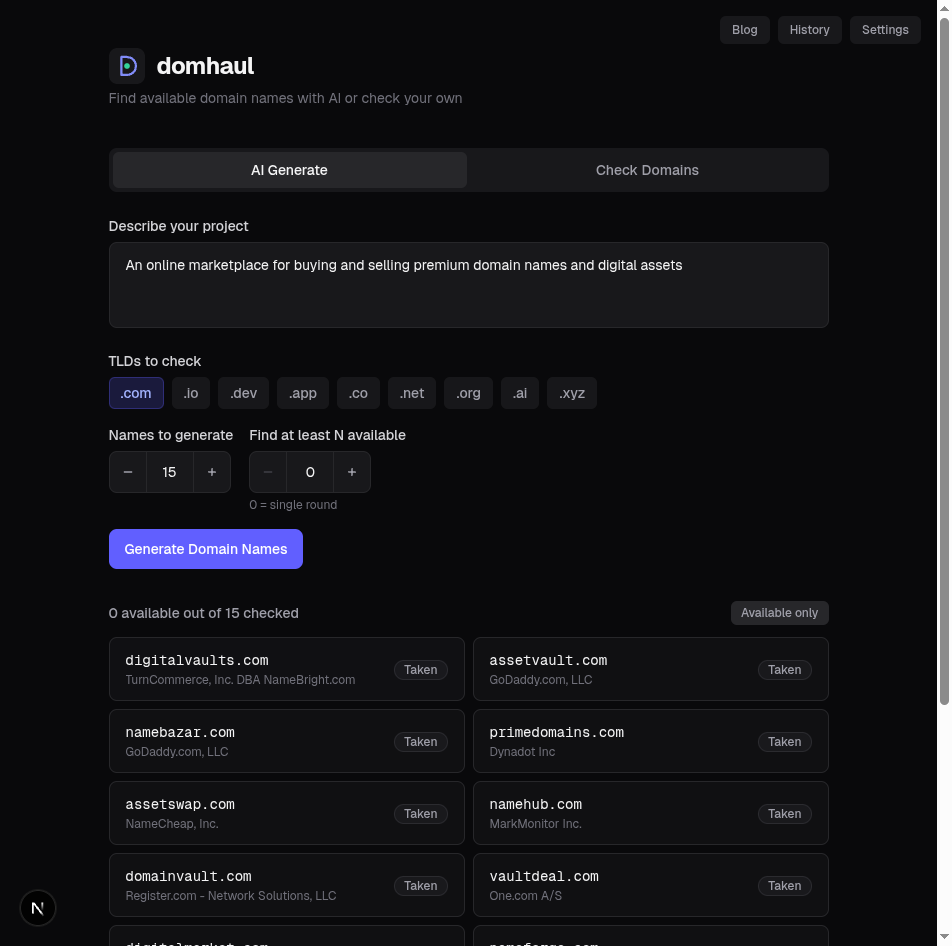
- AI generators — Tools like domhaul can generate creative domain ideas that are still available for registration. If a generated name has strong branding potential, it could be worth registering speculatively.
- Trend spotting — Follow emerging industries, technologies, and cultural trends. Early registration of domains related to AI, crypto, or new product categories has been extremely profitable for forward-thinking investors.
- Closeout sales — Other domain investors sometimes liquidate their portfolios. Watch forums like NamePros and DNForum for bulk sale opportunities.
How to Price and Sell Your Domains
Pricing domains is part art, part science. Use comparable sales data from NameBio and GoDaddy's Domain Appraisal tool as starting points. Estibot is another popular automated valuation tool, though experienced investors warn that automated appraisals should be used as rough guides rather than definitive values.
- List on multiple marketplaces — Sedo, Afternic, Dan.com, and GoDaddy's premium listings each have different buyer audiences. Listing everywhere maximizes exposure.
- Set up a landing page — A simple 'This domain is for sale' page with a contact form catches inbound interest from people who type the domain directly.
- Outbound outreach — Identify businesses that could benefit from your domain and contact them directly. A personal finance company is far more likely to pay premium for investwise.com than a random marketplace buyer.
- Use an escrow service — Escrow.com (recommended by ICANN) protects both buyer and seller during high-value transactions. Never transfer a domain before payment clears.
- Be patient — Domain investing is a long game. Many professional domainers hold names for 1–5 years before finding the right buyer at the right price.
Common Domain Flipping Mistakes
- Registering too many low-quality domains — Renewal fees add up quickly. A portfolio of 100 worthless domains at $10/year costs $1,000 annually. Be selective.
- Ignoring trademark issues — Registering domains that contain trademarked brand names (like NikeShoes.com) violates UDRP policy and can result in losing both the domain and facing legal action.
- Overvaluing your domains — Just because you paid $10 for a domain doesn't mean it's worth $10,000. Use NameBio comparables and be realistic about market demand.
- Neglecting renewals — Forgetting to renew a valuable domain means losing it to the drop pool. Always set auto-renewal on domains you plan to keep.
- Not understanding the buyer — The value of a domain depends entirely on who the buyer is. A domain like cloudkitchen.com is worth very little to most people but could be worth six figures to the right startup.
Real-World Domain Sales to Learn From
Studying past sales gives you a feel for what the market values. Here are some notable public domain sales tracked by DNJournal and NameBio:
- insurance.com — $35.6 million (2010) — Pure keyword value in a high-CPC industry
- carinsurance.com — $49.7 million (2010) — Another keyword play in the insurance vertical
- crypto.com — Reportedly $12 million (2018) — Acquired by the company now known as Crypto.com, demonstrating the brand-defining power of a perfect domain
- nft.com — $15 million (2022) — Trend-driven domain demand at its peak
- hotels.com — $11 million (2001) — Early internet keyword domain that became a billion-dollar brand
Getting Started with Domain Investing
The barrier to entry is low — a single domain registration costs less than a cup of coffee. Start by using domhaul to brainstorm domain ideas based on trending topics or emerging industries. Check availability instantly, register the best names through your preferred registrar, and list them for sale across multiple marketplaces.
Domain flipping rewards patience, research, and an eye for trends. The best time to register a domain is before the market realizes it's valuable — and with the right tools, you can be first.
How much money do I need to start domain flipping?
You can start with as little as $50–100. Standard .com registrations cost $8–12 each through registrars like Cloudflare, Porkbun, or Namecheap. Start small, learn what sells, and reinvest profits into better names.
Is domain flipping still profitable in 2026?
Yes. While the easiest names were registered decades ago, new opportunities emerge constantly with emerging technologies (AI, Web3), new businesses, and cultural trends. The aftermarket continues to grow, with Sedo and Afternic reporting increasing annual transaction volumes.
How long does it take to sell a domain?
It varies widely. Some domains sell within days if there's immediate demand, while others take months or years. Professional domainers treat it as a portfolio business — some names sell quickly, others appreciate over time.
What's the difference between domain flipping and domain squatting?
Domain flipping involves registering generic or brandable names and selling them legitimately. Domain squatting (cybersquatting) means registering domains containing trademarked brand names in bad faith, which violates ICANN's UDRP policy and can result in losing the domain.
Where is the best place to sell domain names?
The most popular domain marketplaces are Sedo, Afternic (GoDaddy), Dan.com, and Flippa. Listing on multiple platforms maximizes your exposure. For high-value domains, consider working with a domain broker like MediaOptions or Saw.com.